
The technical reference. Every published number, in one place.
Specs verified 16–17 July 2026 against techspecs.ui.com. Every figure on this page is Ubiquiti’s own published number. Where Ubiquiti publishes nothing, this page says “Not published” rather than estimating. Contact AVNFi to have a design checked.
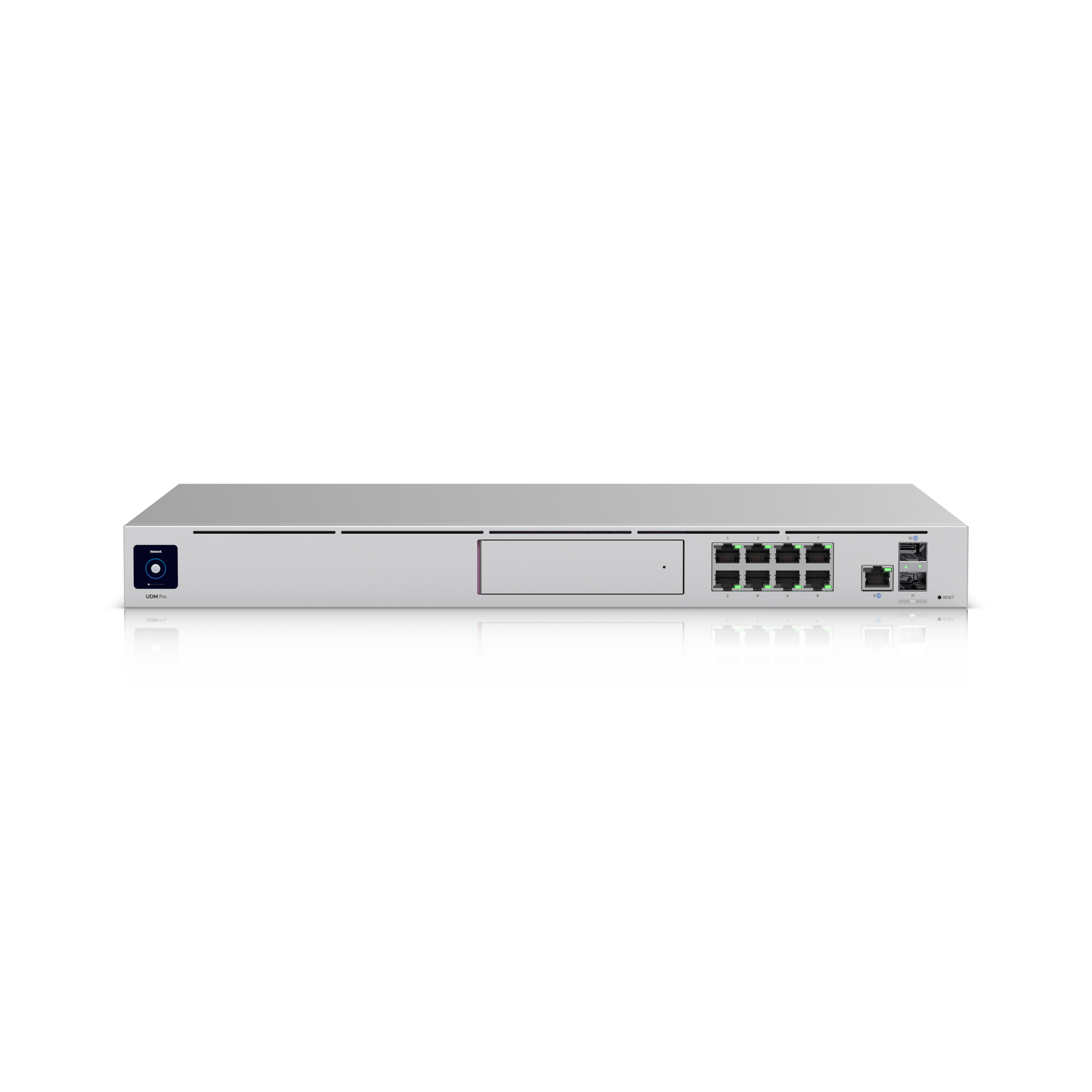
Dream Machine Pro
If you just want to know which one to buy, start with the choosing guides. They answer “which one and why”. This section answers “show me the actual numbers.” Same facts, different depth, nothing here contradicts anything there.
What this is
This is the deep-dive layer of the AVNFi UniFi wiki. It exists for the person who has already decided roughly what they want and now wants to check our arithmetic: the installer sizing a PoE budget, the reseller answering a customer who has read the datasheet, the engineer who wants the operating temperature before the camera goes on a north wall in January.
Every figure on these pages is transcribed from Ubiquiti’s own published specifications at techspecs.ui.com, captured 16 July 2026. Not estimated. Not inferred from a SKU name. Not remembered.
The rule that makes this useful
Where Ubiquiti does not publish a number, these pages say “Not published” and stop. They do not fill the gap with a plausible one. That is the entire value of this layer: one invented figure and a knowledgeable reader is right to stop trusting all of them.
You will see “Not published” a lot. That is the data being honest, not the page being lazy.
The pages
| Page | What’s in it |
|---|---|
| Cameras: the full spec matrix | All 30 cameras in the spec file. Resolution, sensor, field of view in degrees, IR range, frame rate, draw, PoE mode, IP and IK ratings, audio, detections, NDAA, operating temperature, dimensions, weight, mounting. |
| Gateways and switches | Throughput, client and device ceilings, Protect camera ceilings by resolution tier, drive bays, port layouts, PoE budgets, rack units. Includes the conditional-PoE section, the single most misleading number in the catalogue. |
| PoE reference | 802.3af / at / bt explained, a full per-device draw table, worked budget calculations, and why a switch can have budget and still not power your device. |
| Power and thermal | Operating temperature ranges across the range, and a “will it survive a Calgary winter” table. Nobody else documents this. It decides jobs here. |
| Compatibility reference | Ubiquiti’s own published compatibility blocks, verbatim, and the far longer list of products that publish none. Plus what the SKU suffixes mean. |
| Storage reference | Drive bays per device, CMR vs SMR, and retention math with the actual variables, including why the answer is a range and not a number. |
Where the data comes from, and where it stops
| Source | What it is authoritative for | Captured |
|---|---|---|
| techspecs.ui.com | Every spec: watts, ports, ratings, temperatures, dimensions | 2026-07-16 |
| ca.store.ui.com (cart) | Prices, all-in, including the memory surcharge | 2026-07-16 |
| ca.store.ui.com (product page) | Published compatibility blocks and variant lists | 2026-07-16 |
The spec file holds 122 device rows, of which 114 publish a max power consumption figure, 15 gateways, 20 switches, 28 access points, 30 cameras, plus Access hardware, sensors and 8 bridging and connectivity devices.
These pages track the data file, not a snapshot of it. The bridging, 5G and connectivity products were added on 2026-07-17 and are already reflected below. Every table on every page is generated directly from the spec file rather than typed, which is why the counts in the prose and the rows in the tables cannot drift apart.
Known gaps, stated up front
These are holes in Ubiquiti’s published data, not in our transcription. We would rather you knew.
- No spec rows for standalone recorders. UNVR, ENVR and UNVR-Instant are not in the spec file. We have a cart-verified price for the UNVR and no specs for any of them. Where the storage page needs a recorder figure, it says so rather than guessing.
- Access point rows are power, PoE and uplink only. No radio data, no client-count-per-AP, no transmit power, no antenna gain. Ubiquiti does not publish a per-AP client count, anyone quoting you one is quoting a guess. AP coverage is a site survey, not a table. (It publishes all of that data for its bridging products, which makes the omission a choice.)
- No operating temperature for any switch or any access point, 0 of 20 and 0 of 28. Only 2 of 15 gateways publish one. Cameras, Access hardware, sensors and bridging devices publish them in full. See power and thermal.
- No retention formula. Ubiquiti publishes no per-camera bitrate and no days-per-terabyte formula. Every retention number anywhere (ours included) is an estimate. See storage.
- No focal length in mm for most cameras. Ubiquiti publishes field of view in degrees. Most cameras’ lens row reads only “Fixed focal length”. We reproduce the row verbatim and never convert.
About prices on these pages
The technical layer is mostly spec, not price, but where money appears, the same rule holds.
29 SKUs are cart-verified, meaning someone put them in a real cart on ca.store.ui.com and read the total back. A representative sample:
| SKU | Base | Memory surcharge | All-in |
|---|---|---|---|
| UNVR | $399 | $31 | $430 |
| UNAS-Pro | $715 | $56 | $771 |
| U7-Pro | $239 | $18 | $257 |
| USW-Pro-48-PoE | $1,499 | $118 | $1,617 |
| UDM-Pro-Max | $859 | $67 | $926 |
| UACC-Lock-Strike-Secure-15mm (fail-secure strike) | $129 | $0 | $129 |
| USW-Flex-Mini (a switch) | $39 | $0 | $39 |
| UVC-AI-MS-2 (a $1,005 camera) | $1,005 | $0 | $1,005 |
Where the surcharge applies it runs 7.43–7.89%, consistent across all 29 cart-verified SKUs. Some products carry none at all, and the category does not predict which. A switch (USW-Flex-Mini) and a $1,005 camera (UVC-AI-MS-2) both show $0, while other switches and cameras are surcharged normally. Exemption appears only as the absence of a surcharge line in the cart. The surcharge is invisible on the product page and itemized only at checkout.
It is a band, not a formula, and not a category rule. Do not compute a surcharge from it, and do not assume a product is exempt because of what it is. Read the cart, per SKU. Any price in this wiki that is not in the table above is either labelled “basis unconfirmed” or omitted entirely. See pricing.
AVNFi adds no markup to hardware. Equipment goes in at the Ubiquiti store price, surcharge included. We charge for design and labour. When we say a UDM-Pro-Max is $926, that is Ubiquiti’s price and it is the price on your quote, the only thing we are selling is the judgement about whether it is the right box.
Related
- Start Here: What Is UniFi?, the plain-English version of everything below
- What Works With What, the compatibility spine
- Product Ladders, step up, step down, for every family
- Pricing, why the quote doesn’t match the store
- Glossary, every acronym on these pages, defined once
Specs from techspecs.ui.com, captured 2026-07-16. If a number here has drifted, tell us and we’ll fix it. AVNFi, Calgary.